
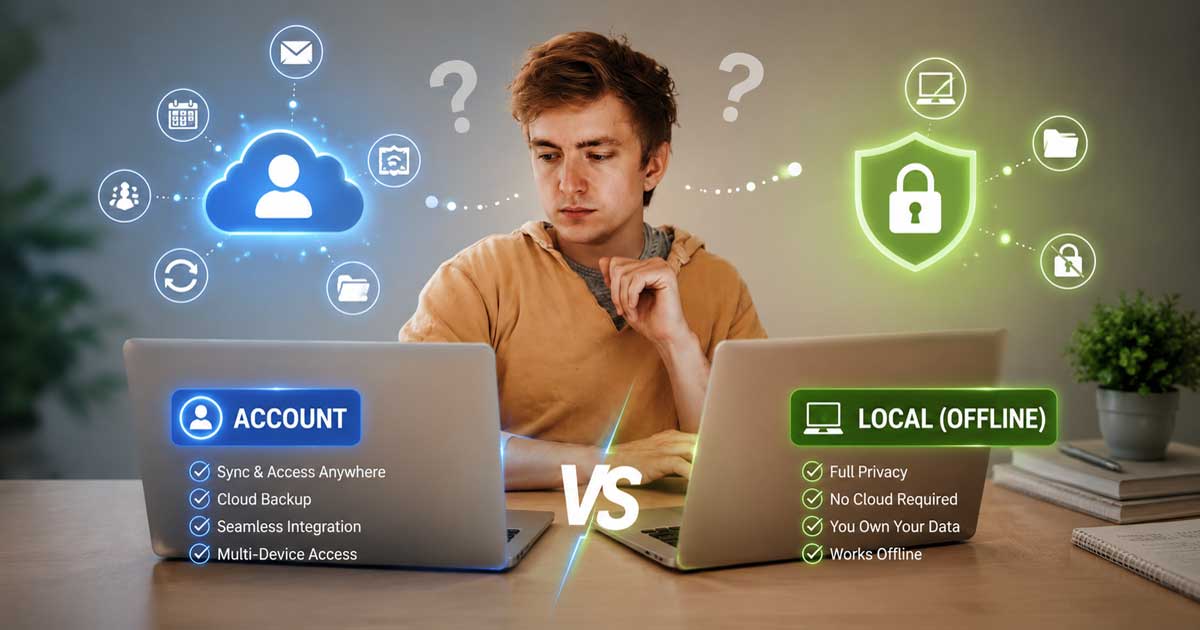
Setting up a new Windows 11 computer without a Microsoft account has become more difficult than it used to be.
Older methods, such as using OOBE\BYPASSNRO, worked well on many earlier Windows 11 versions, including 22H2. On newer builds, that method may no longer work. Microsoft has been moving Windows 11 setup toward requiring internet access and Microsoft account sign-in during the first setup process.
The best method now depends on which version of Windows 11 you are setting up.
Windows 11 Pro still gives you a more reliable local-account path through the work or school / domain join setup option. Windows 11 Home is more restricted and may require a workaround if you want to avoid creating a Microsoft account.
Before You Start
These steps are intended for people setting up a computer they own or are responsible for maintaining.
Microsoft changes Windows setup screens from time to time. A method that works today may change after a future Windows update or installation media release.
Also keep in mind that a Microsoft account is not always bad. It can provide OneDrive sync, password recovery, Store access, and other cloud features. But many home users and small businesses still prefer a local account for privacy, simplicity, or service setup reasons.
Windows 11 Pro: Use Domain Join Instead
This is currently the cleanest method for Windows 11 Pro.
You do not actually need to join a business domain. The option simply lets you continue setup by creating a local account.
Steps for Windows 11 Pro
- Start the Windows 11 setup process.
- Choose your region and keyboard layout.
- When asked how you want to set up the device, choose: Set up for work or school
- Continue until you reach the Microsoft sign-in screen.
- Select: Sign-in options
- Choose: Domain join instead
- Create a local user name.
- Create a password.
- Choose and answer the required security questions.
- Continue through the remaining privacy and setup screens.
After setup is complete, Windows 11 Pro should open using the local account you created.
This method is consistent with Microsoft’s own documentation stating that Windows 11 Pro and higher editions provide local-account options during setup, unlike Windows 11 Home, which is more restrictive.
Windows 11 Home: Try the Local-Only Setup Command
Windows 11 Home usually pushes harder for a Microsoft account. If there is no visible local-account option, the most common current workaround is the local-only setup command.
Steps for Windows 11 Home
- Start the Windows 11 setup process.
- Choose your region and keyboard layout.
- When Windows asks you to connect to a network or sign in with a Microsoft account, press: Shift + F10 On some laptops, you may need: Shift + Fn + F10
- A Command Prompt window should open.
- Type the following command:
start ms-cxh:localonly - Press Enter.
- A local account setup window should appear.
- Enter the local user name you want to use.
- Create a password, or leave it blank if you intentionally want no password.
- Continue through setup.
This method has been widely used on newer Windows 11 setup builds after older OOBE\BYPASSNRO methods became less reliable. Micro Center’s 2026 guide also lists start ms-cxh:localonly as the current terminal method for new PCs and laptops.
If That Does Not Work
If the command above does not work, Microsoft may have changed the setup process again.
Another method some technicians use is creating the Windows 11 installation USB with Rufus and selecting the option to remove the requirement for an online Microsoft account. This is best used when doing a clean installation from USB, not when simply starting a store-bought computer for the first time.
For most home users, the safer fallback is:
- Complete setup using a Microsoft account.
- Create a local administrator account after Windows is installed.
- Move into that local account.
- Remove or stop using the Microsoft account if desired.
Dell documents this post-setup method using netplwiz, where you add a local account, set it as Administrator, then sign into that local account instead.
Create a Local Account After Setup
If Windows forced you to use a Microsoft account during setup, you can still create a local account afterward.
Steps
- Press Windows Key + R.
- Type:
netplwiz - Press Enter.
- Select Add.
- Choose: Sign in without a Microsoft account
- Select: Local account
- Enter a user name and password.
- Finish creating the account.
- Select the new local account.
- Open Properties.
- Go to Group Membership.
- Select Administrator.
- Apply the changes.
- Sign out and sign into the new local account.
Once the local account is working, you can decide whether to keep or remove the Microsoft account from the computer.
Which Method Should You Use?
For Windows 11 Pro, use:
Set up for work or school > Sign-in options > Domain join instead
For Windows 11 Home, try:
Shift + F10 > start ms-cxh:localonly
For stubborn systems, or if Microsoft changes setup again, use the fallback method:
Set up with a Microsoft account first, then create a local administrator account after setup.
Need Help Setting Up a New Windows 11 PC?
PCITService helps home users and small businesses set up new computers, transfer files, configure email, install software, and adjust Windows privacy and account settings.
If you are setting up a new Windows 11 computer and do not want it tied to a Microsoft account, contact us for help.